The rules, and what they cover
Is it legal now?
Yes, it has been since 27 August 2026. That's when July's regulations came into force, alongside a rewrite of the planning rules for solar equipment. Older advice you find online may not reflect either change.
What is the wooden wall rule?
The rewritten rules do not cover a panel installed on a wooden wall, a balcony or timber cladding. The Planning Portal sets that out for houses and again for blocks of flats, marked as applying to plug-in solar. You can follow either version of the rules until 27 August 2027.
How far may it stand proud of the wall?
200 mm where the wall meets a highway, 400 mm anywhere else. A pitched roof surface has to stay under the ridge line and mustn't project past 200 mm. A flat roof can rise up to 600 mm above the roof itself.
I live in a conservation area.
Then you cannot put a panel on a wall of yours that fronts a highway, and a World Heritage Site works the same way. Walls that face somewhere else are outside that condition, though the rest of the rules still apply to them.
My house is listed.
Listed buildings need their own permission on top of this, both planning permission and listed building consent. And this right doesn't apply at all once a house sits in the grounds of a listed building, or on a scheduled monument. Talk to the council early, before you've ordered anything.
The panel itself
What are the limits on a compliant panel?
800 VA of apparent power to the mains, a rated voltage of up to 253 V AC at 50 Hz, and no more than 3.5 A of current. On the DC side the panels can total up to 2000 W, with up to four per inverter and no more than two in series in any one string. DC residual current reaching the mains has to stay under 5 mA. A plug and socket used outdoors need an IP55 rating or better.
How do I know a kit is the real thing?
Three things have to happen before it can be sold. It has to be type tested in accordance with G98, registered on the ENA Type Test Register through the ENA Direct Connect platform, and confirmed as assessed and compliant. The register is where you check. Look the kit up there before you buy, because nobody has assessed one that isn't listed.
Why do listings quote two different wattages?
Because there are two numbers. The inverter output is capped at 800 VA. The panels behind it can come to 2000 W. A listing that quotes only the panel figure is telling you half. Above 960 W of panel capacity the specification advises a professional assessment of whether the installation suits the building.
Is there a battery version?
Not one that is covered. The interim product specification says it does not cover plug-in battery systems, or plug-in solar devices with a battery built in. A kit sold to you with a battery on it sits outside what was approved back in August.
Which specification is the current one?
Version 2.0, July 2026. Version 1.0 from June 2026 is stamped withdrawn on every page and both are still online, so check the version number on anything you are shown.
Yorkshire, and what a panel would make
Four mountings at one Leeds address, and the reason we keep pointing at the back of the house.
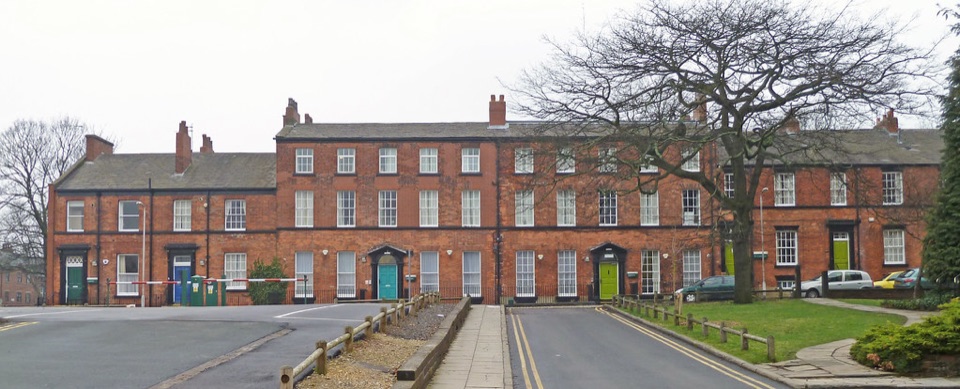
What would a panel make at a Yorkshire address?
Modelled in Leeds for an 800 watt panel with 14 per cent system losses and no shade: 736 kWh a year on a south facing roof pitch at 35 degrees, 729 kWh on a frame on the ground at 30 degrees, 550 kWh on an upright south facing wall and 376 kWh on an upright east facing wall. Those are ideal figures from PVGIS, queried 13 September 2026. A real yard with a wall or a tree in it will do less.
Are we too far north for this to be worth it?
The difference between regions is smaller than the difference between mountings. Where you put the panel matters more than which county you are in. A frame on the ground in Leeds comes within about one per cent of an ideal roof pitch at the same house.
Does generation mean saving?
No. Your saving depends on what you happen to be running while the panel is working. Batteries are outside the approved class, so there is no way to keep the rest of it.
Who do I tell in Yorkshire?
Northern Powergrid (Yorkshire) plc holds it, as far as our regional map shows, so check your postcode against their own checker to be sure. Northern Powergrid (Northeast) plc takes over just to the north, which matters if you're near the top of North Yorkshire. Or just ring 105. It's free anywhere in Great Britain and settles it in one call.
Living with one
What you can do yourself, what has to wait for an electrician, and the two rules people trip over.
Can I put one up myself?
Yes, the panel itself. The specification is written for products an ordinary person can install and use. A qualified electrician has to do anything that involves testing the house wiring or changing it, and you are told to get one to look at any socket you have doubts about.
What about my insurance?
Every compliant panel ships with instructions that tell you to check with your insurer. Have that conversation before the panel turns up, not after.
Can I use an extension lead to reach it?
No. The specification rules out extension cables, multi-way adaptors, RCD adaptors and travel adaptors, and says so both on the panel and in the paperwork that comes with it. If the socket's out of reach, the answer is another socket, not a lead.
We rent, or we are leaseholders.
Get permission first. A landlord has to agree to it, and where there's a lease the freeholder may need to as well. It's a gap the consultation flagged and the regulations left open, so don't assume either way.
What about one panel at the front and another round the back?
No, just the one, for the whole house. The specification's per-circuit limit gets overridden by the network side. G98 Issue 2 Amendment 1 holds it at a single panel per household, wherever you'd put the second one.
The answers above come from five documents. The Plug-in Solar Device Interim Product Specification version 2.0 of July 2026, the Planning Portal guidance on solar equipment, Ofgem on the G98 change, the government's final stage impact assessment, and PVGIS. We went through all five on 13 September 2026.
Tell us about your house
We need your name, postcode and email, and to know where the panel would go and what it's made of. Then we email you back with what the rules allow and what it would make in a year.
You'll get a reply by email. We keep your details to ourselves and take no commission.
- North Yorkshire
- West Yorkshire
- South Yorkshire
- East Riding of Yorkshire
- Leeds
- Sheffield
- Bradford
- Hull
- York